
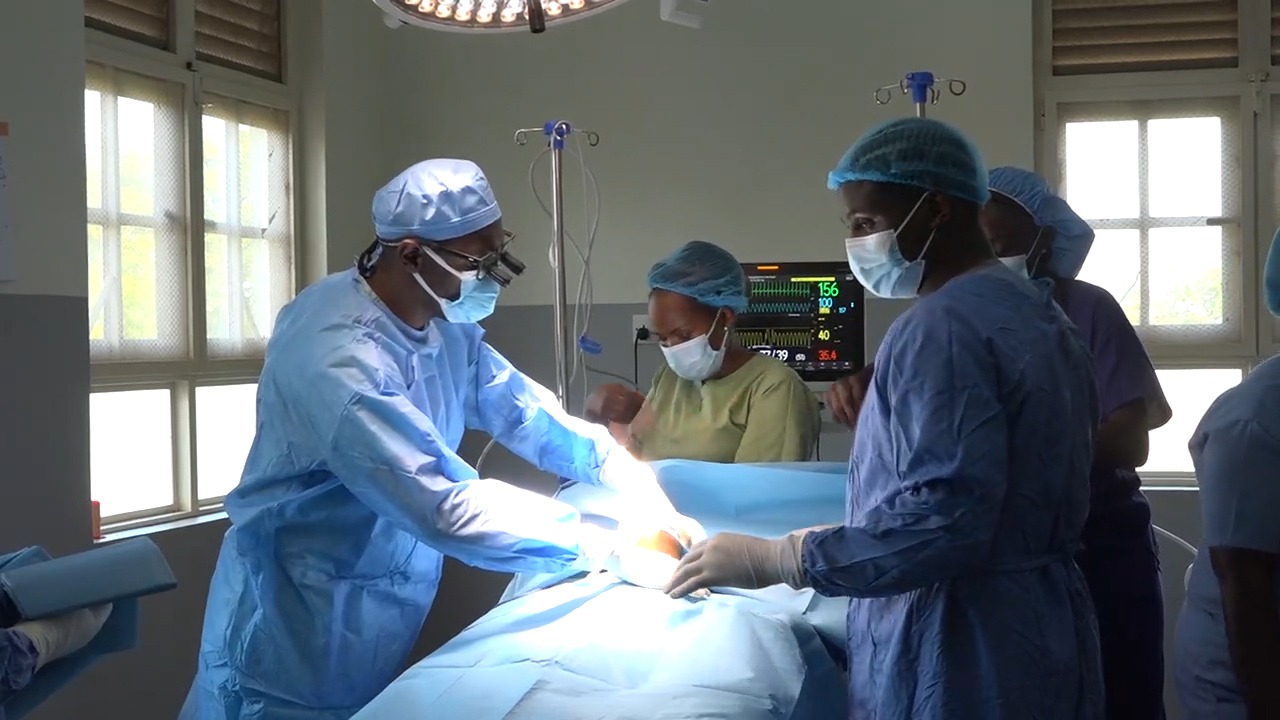
Health specialists have raised concern over the growing number of children born with congenital heart defects in Uganda, attributing the trend largely to missed maternal vaccinations and limited antenatal care attendance.
The concerns were highlighted following a week-long medical camp organized by the Uganda Heart Institute (UHI) in collaboration with Jinja Regional Referral Hospital, during which 17 children successfully underwent life-saving heart surgeries.
According to Dr. Peter Lwabi, Deputy Executive Director of the Uganda Heart Institute, cases of congenital heart defects—particularly “holes in the heart”—have been steadily increasing in recent years.
Dr. Lwabi pointed to inadequate antenatal care as a key contributing factor, noting that expectant mothers who miss routine check-ups also miss critical vaccinations, including the Measles, Mumps and Rubella (MMR) vaccine.
He emphasized that rubella infection during pregnancy is strongly associated with congenital heart abnormalities in newborns.
“One of the common conditions we see is Patent Ductus Arteriosus (PDA), where a blood vessel called the ductus arteriosus fails to close after birth,” Dr. Lwabi explained.
He noted that the ductus arteriosus plays a vital role in fetal circulation by allowing blood to bypass the lungs while the baby is still in the womb. It is expected to close shortly after birth when the newborn begins to breathe independently. However, in some cases—particularly among premature babies—the vessel remains open due to underdeveloped structures, leading to abnormal blood flow between the aorta and pulmonary artery.
“This condition is more common in babies born before 37 weeks, as their systems are not fully developed. In addition, maternal infections such as rubella can interfere with normal heart development. Rubella is also linked to other complications, including cataracts and poor growth,” he added.
Dr. Lwabi further acknowledged that not all congenital heart defects are preventable, noting that some arise from genetic factors or “inborn errors” during fetal development.
Despite these challenges, he stressed that preventive measures—particularly vaccination and proper antenatal care—remain critical in reducing the burden of congenital heart disease.
Meanwhile, the Uganda Heart Institute is in the final stages of plans to expand cardiac care services across the country, including the establishment of regional heart treatment centers. One such facility is set to be constructed at Jinja Regional Referral Hospital.
“We have been allocated two acres of land for the project, which will be implemented under our ongoing strategic master plan that commenced last year,” Dr. Lwabi revealed.
The Director of Jinja Regional Referral Hospital, Dr. Yayi Alfred, commended the partnership with the Uganda Heart Institute and the success of the surgical camp. He said the planned cardiac center will significantly reduce referrals to Mulago National Referral Hospital, easing pressure on both patients and the national health system.
Dr. Yayi also noted that discussions are ongoing to enhance the capacity of local health workers through specialized training in the diagnosis and management of heart diseases.
“I would like to thank the Government of Uganda and the Ministry of Health for investing in critical infrastructure such as intensive care units and oxygen plants, which now enable us to host specialized medical services,” Dr. Yayi said. “We intend to continue holding such medical camps annually until a fully-fledged regional cardiac center is established here in Jinja.”
Health experts believe that expanding access to specialized care, coupled with strengthened preventive strategies, will be key to addressing the rising burden of congenital heart defects, particularly in high-risk regions such as Busoga.
